- English
- French
- German
- Portuguese
- Spanish
- Russian
- Japanese
- Korean
- Arabic
- Greek
- German
- Turkish
- Italian
- Danish
- Romanian
- Indonesian
- Czech
- Afrikaans
- Swedish
- Polish
- Basque
- Catalan
- Esperanto
- Hindi
- Lao
- Albanian
- Amharic
- Armenian
- Azerbaijani
- Belarusian
- Bengali
- Bosnian
- Bulgarian
- Cebuano
- Chichewa
- Corsican
- Croatian
- Dutch
- Estonian
- Filipino
- Finnish
- Frisian
- Galician
- Georgian
- Gujarati
- Haitian
- Hausa
- Hawaiian
- Hebrew
- Hmong
- Hungarian
- Icelandic
- Igbo
- Javanese
- Kannada
- Kazakh
- Khmer
- Kurdish
- Kyrgyz
- Latin
- Latvian
- Lithuanian
- Luxembou..
- Macedonian
- Malagasy
- Malay
- Malayalam
- Maltese
- Maori
- Marathi
- Mongolian
- Burmese
- Nepali
- Norwegian
- Pashto
- Persian
- Punjabi
- Serbian
- Sesotho
- Sinhala
- Slovak
- Slovenian
- Somali
- Samoan
- Scots Gaelic
- Shona
- Sindhi
- Sundanese
- Swahili
- Tajik
- Tamil
- Telugu
- Thai
- Ukrainian
- Urdu
- Uzbek
- Vietnamese
- Welsh
- Xhosa
- Yiddish
- Yoruba
- Zulu
Enhancing EV Battery Safety with Pt100 Temperature Sensors
The electric car revolution rests on one important part working perfectly in harsh conditions: the battery. As EV makers try to make more powerful batteries and faster chargers, the chance of heat events going wrong increases very quickly. A proven way to deal with this problem is to use a Pt100 temperature probe, which provides accurate thermal tracking and high dependability. These platinum-based resistance temperature monitors give accurate, repeated readings even in the harsh thermal environment of battery packs. This helps engineers find problems early on, before they become safety issues. The Pt100 temperature probe is an important part of current battery management systems because it can measure temperatures with an accuracy of ±0.15°C and respond in fractions of a second.
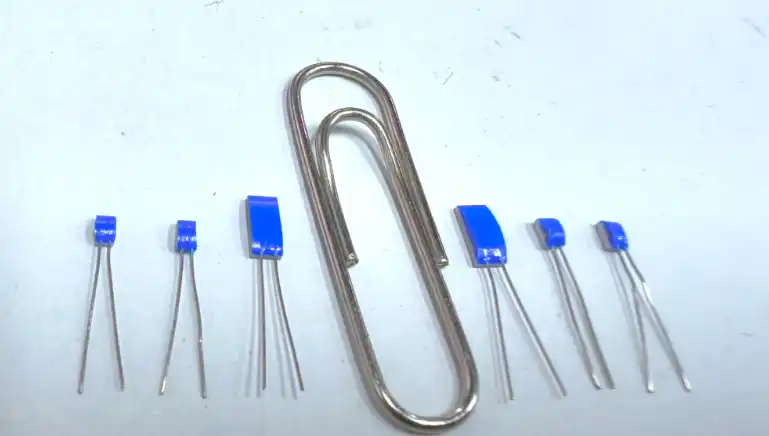
Understanding Pt100 Temperature Sensors and Their Role in EV Battery Safety
What Makes Pt100 Sensors Different from Other Temperature Measurement Devices
Out of all the temperature measuring technologies that can be used with EV batteries, the Pt100 stands out because of how it is built. Platinum resistance temperature monitors work by measuring changes in the resistance of a high-purity platinum element. This is different from thermocouples, which make voltage based on different metal joints. Following the well-known IEC 60751 standard, this platinum element has an electrical resistance of exactly 100 ohms at 0°C. The resistance goes up in a straight line with temperature, with an exact coefficient of 0.003851 Ω/Ω/°C. This means that measures can be made over a wide temperature range, from -200°C to +850°C, with a high level of accuracy.
How Pt100 Sensors Prevent Thermal Runaway in Battery Packs
One of the most dangerous ways for lithium-ion technology to fail is for the battery to overheat. When one cell starts to burn because of a short circuit inside, a manufacturing flaw, or damage from the outside, it can set off a chain reaction that damages the whole battery pack. Pt100 temperature sensors are the first line of defense because they constantly check the temperatures of the surfaces of cells with such accuracy that they can pick up changes in temperature as small as 0.1°C.
With this early warning feature, Battery Management Systems can take safety steps like slowing down charging, turning on cooling systems, or starting controlled shutdown sequences long before temperatures hit dangerous levels. Data from automakers in the real world shows that platinum resistance monitors that are properly set cut down on thermal incident rates by over 60% compared to systems that use thermistor arrays that are not as precise.
Comparing Pt100 with Thermocouples and Thermistors in EV Applications
Each type of temperature sensor technology is useful for different battery checking tasks. Thermocouples can work in a wide range of temperatures and are built to last, but they are less accurate and can be affected by electromagnetic interference that is common in high-voltage EV settings. Thermistors are very sensitive in very small temperature ranges, but their reactions are not linear, which makes signal processing and tuning harder over the 20°C to 60°C temperature range that most battery packs work in. Pt100 sensors get around these problems by mixing the long-lasting thermocouple with better linearity and steadiness over time. The platinum they're made of doesn't break down when exposed to electrolytes, and the way they measure resistance doesn't get affected by electrical noise from inverters and motor drives.
Key Criteria for Selecting Pt100 Temperature Probes for Industrial EV Battery Applications
Accuracy Classes and What They Mean for Battery Safety
The IEC 60751 standard sets clear levels of accuracy that have a direct effect on whether a sensor is suitable for tracking batteries that are very important. Class B sensors have a range of ±(0.3 + 0.005|t|)°C, which is good for most industrial uses but might not be enough to find small temperature differences in battery stacks that are close together. This standard is tightened to ±(0.15 + 0.002|t|)°C in Class A, which gives most EV battery management needs the accuracy they need.
Modern companies now make Class AA and even 1/10 DIN versions that can achieve ±(0.1 + 0.0017|t|)°C or better, which lets you find changes in temperature that indicate early-stage cell breakdown. When reviewing suppliers, people in charge of buying things should ask for calibration papers that can be traced back to national metrology centers. This way, the real performance of the sensors can be checked, not just the accuracy class that is stated.
Wiring Configurations and Their Impact on Measurement Reliability
In real-world setups, the choice between 2-wire, 3-wire, and 4-wire Pt100 configurations has a big impact on how accurate measurements are. With two-wire systems, readings are skewed by the resistance of the leads, which gets worse as the cable length and temperature change in the room. Smart circuit design in three-wire setups makes up for the resistance of the leads, giving good accuracy for most battery tracking tasks where sensors connect to BMS modules within two meters.
Pt100 temperature probe solutions with four-wire Kelvin connections use different current-carrying and voltage-sensing conductors to get rid of all lead resistance. This gives the best level of accuracy but makes wiring more complicated. When designing battery packs with sensor networks that are spread out over several meters, a 4-wire topology works best. On the other hand, properly calibrated 3-wire solutions can make tracking at the module level more cost-effective.
Form Factors and Physical Specifications for Battery Integration
The way a physical sensor is built affects how easy it is to place and how reliable it is over time in battery packs with limited shapes. Here are the most important form factor factors that affect how well an EV works:
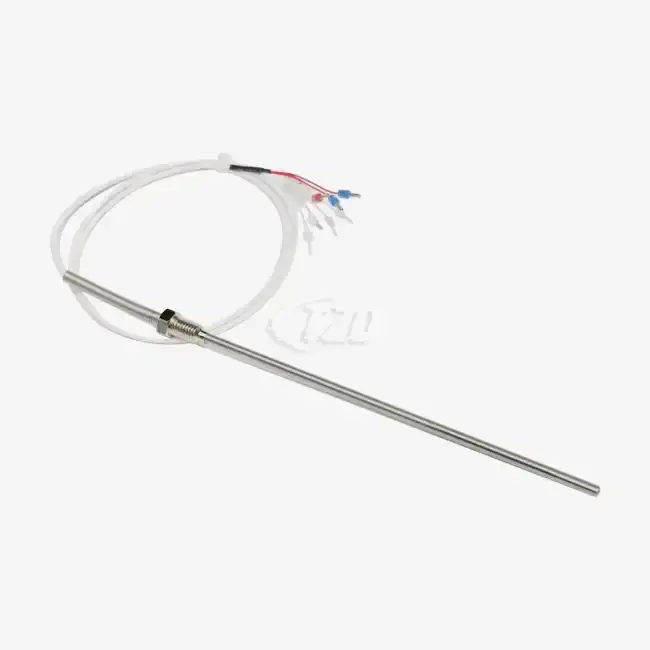
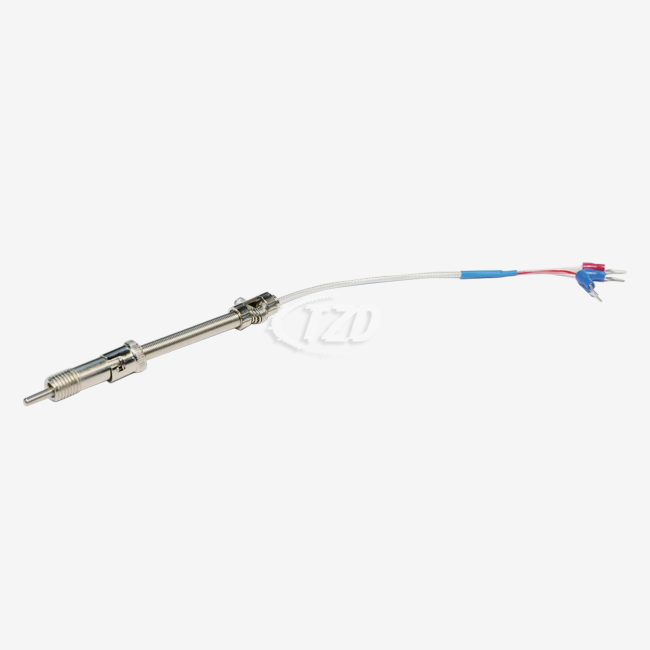
Rigid probes with stainless steel sheaths are the best choice for inserting into threaded ports on cooling plates or structural mounting points because they offer good mechanical support and thermal conductivity. Their strong design can handle vibrations higher than 40g and shocks up to 100g, which meets the standards for car qualification.
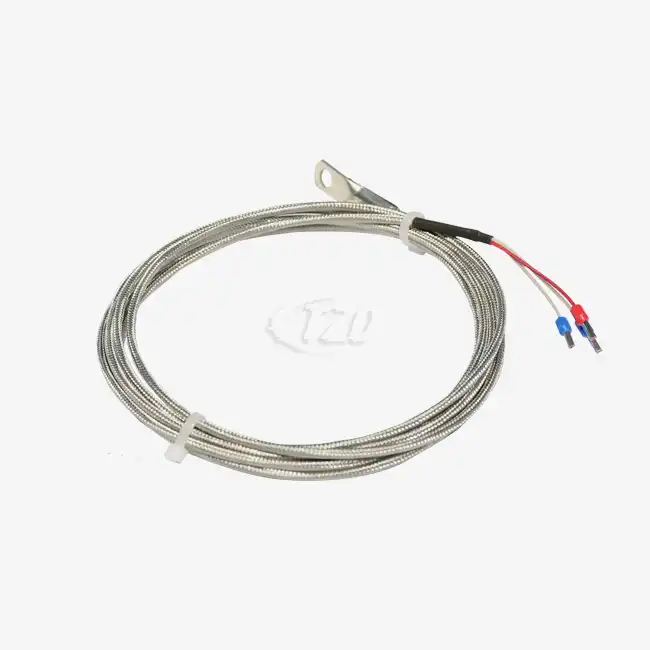
Flexible cable probes let you place sensors directly on the outside of cells or connect cells together, which is not possible with hard sensors. They are usually made with silicone or fluoropolymer padding that is rated for the chemical conditions that battery packs face, such as electrolyte contact during service life.
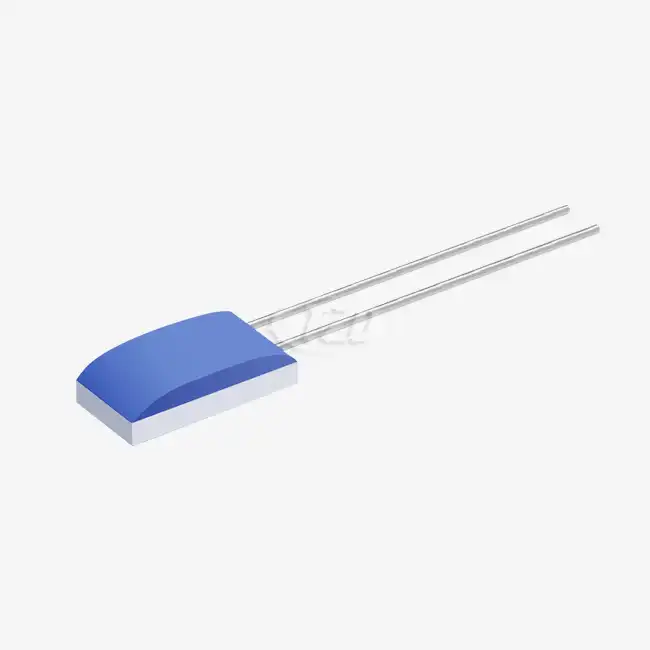
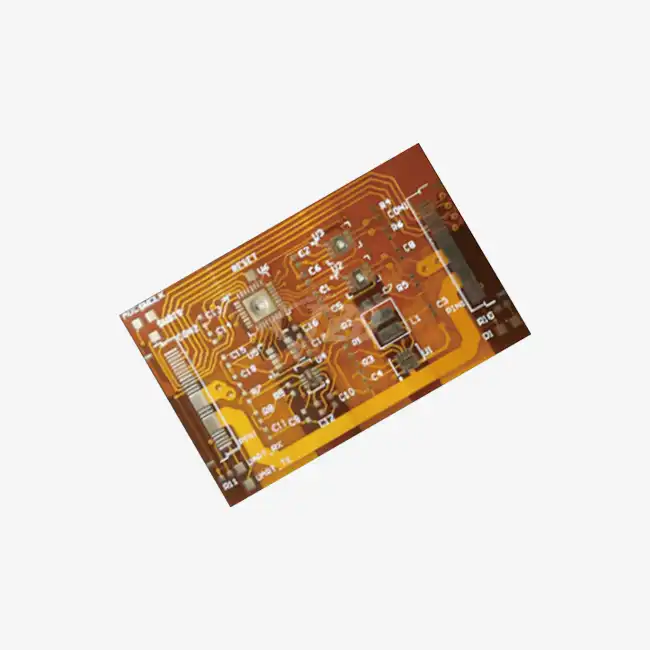
Miniaturized thin-film elements made with photolithography have reaction times of less than 0.1 seconds because they have less thermal mass, which lets them quickly sense sudden changes in temperature. These very small sensors are only 1.2 mm long, so they can fit on battery control circuit boards with limited room.
Procurement Guide: How to Source Reliable Pt100 Temperature Sensors for EV Battery Safety?
Evaluating Supplier Capabilities and Industry Credentials
For safety-critical EV battery uses, finding temperature sensors from suppliers requires more than just comparing prices. Leading makers stand out by having complete quality management systems that are approved to ISO 9001 standards. These systems show that the production process is always under control. Verification of compliance with automotive-grade quality standards like IATF 16949 shows that providers follow the strict measures needed for tracking and failure prevention in automotive supply chains.
Another important difference is the technical support infrastructure. Field Application Engineers who know a lot about managing battery temperature can help you choose the right sensors, install them correctly, and connect them to your current BMS systems. Procurement teams should ask for proof of successful launches in similar EV applications in the past, such as case study paperwork and customer references.
Managing Lead Times and Customization Requirements
Standard catalog Pt100 sensors can be shipped within days, but industrial EV uses often need unique specs, which makes the buying process take a lot longer. Custom probe lengths made to fit certain battery cell sizes, special connector types that work with sealed battery cases, and better waterproofing for systems that are cooled by fluids all need engineering advice and testing cycles. Manufacturers with a lot of experience can make custom sensor designs in four to eight weeks, which includes testing the prototype.
However, if you need unusual materials or strict weather standards, the process could take several months. Building strategic relationships with suppliers during the small-batch testing phase makes the move to mass buying easier by putting customization engineering work ahead of time and getting capacity agreements. Smart procurement pros arrange framework agreements that spell out pricing structures, minimum order amounts, and lead time promises before qualification programs end. This keeps supplies from getting backed up during the production ramp.
Understanding Total Cost of Ownership Beyond Unit Price
The price of a single sensor has a clear effect on the bill of materials, but a total cost study shows that there are other factors that affect long-term value as well. Long-lasting sensors (with drift rates below 0.04% per year) don't need to be calibrated as often or at all, which saves a lot of money on maintenance costs over the five to ten year battery service life. Higher-accuracy devices, such as the Pt100 temperature probe, allow for better thermal management control strategies that protect against temperature changes and increase battery life. This results in lower warranty costs that are much greater than the initial price premiums for sensors.
On the other hand, sensors that aren't good enough can lead to early failures, field service calls, and even safety recalls, all of which can cost many times more than choosing proven parts in the first place. Instead of just looking at the price, engineering and procurement teams get the most value when they evaluate sensors using total cost modeling that includes data on reliability, the number of times they need to be calibrated, and failure mode effect analysis.
Integration and Calibration Best Practices for Pt100 Temperature Sensors in EV Battery Systems
Proper Installation Techniques for Maximum Accuracy and Longevity
Whether the claimed accuracy is met by real measurement performance depends on how well the sensors are installed. The key measurement junction is made up of the thermal contact between the probe tip and the surface being measured. If the contact isn't good, thermal resistance builds up, which slows down the response time and leads to measurement mistakes. Thermally conductive glue or compression mounts work best for surface-mounted sensors because they allow for the best heat transfer while keeping the electronics separate.
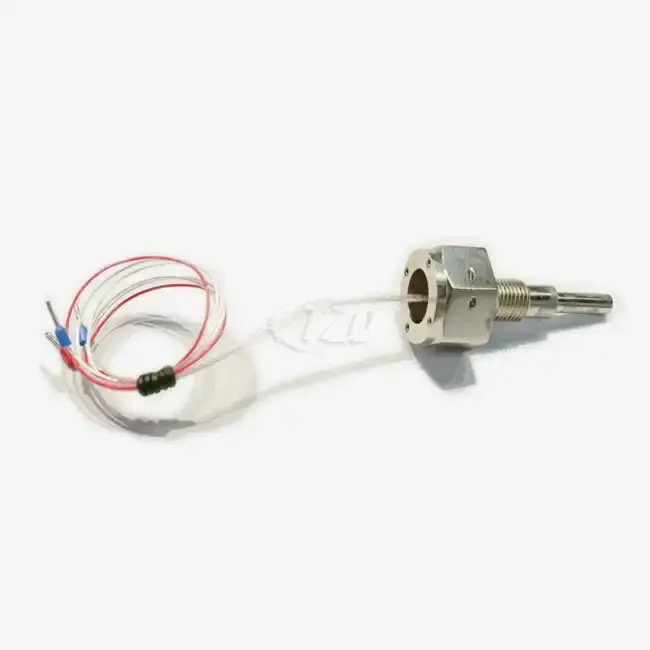
Installing a threaded probe requires using thermal compound and the right amount of pressure to make sure that the thermal connection is stable and doesn't damage the sensor elements. When routing cables, it's important to be careful not to make sharp turns that could damage the internal wires and to keep them away from high-voltage power lines that send out electromagnetic fields. To keep mechanical damage, chemical exposure, and water from getting in, the glands need to be sealed properly and there needs to be pressure relief. This is especially important for battery packs that are subject to thermal cycling and vibrations throughout the life of the car.
Calibration Strategies to Maintain Long-Term Measurement Integrity
Even platinum resistance monitors that are very stable can benefit from being checked for adjustment on a regular basis. Industrial calibration labs check sensor data against national temperature scale-linked reference standards, usually more than one point in the working range. In difficult situations, Class A sensors should be calibrated and verified every twelve to twenty-four months. Class AA devices, on the other hand, should be validated once a year or even every six months.
Many battery makers use two types of calibration: one is done by a third-party lab once a year for a representative sample of the installed sensors, and the rest of the sensors are checked in-house every three months using portable calibration baths. This approach strikes a balance between quality security and low costs. Recording the history of calibrations creates useful information for predictive maintenance algorithms that find sensors with strange drift patterns before they compromise the safety system's integrity.
Real-World Performance Data from EV Manufacturing
Several Tier 1 automakers have released data showing that upgrading battery thermal tracking systems to precision Pt100 networks led to measured gains. One big European company said that battery guarantee claims dropped by 43% after they switched from thermistor-based systems to Class A platinum resistance monitors with 4-wire connections throughout their battery packs. The higher level of accuracy made it possible for more aggressive thermal management and tighter cell balance routines, which increased cycle life without lowering safety limits.
A major Asian EV maker reported that thermal runaway incidents stopped happening in all 50,000 of their vehicles after adding rapid-response thin-film Pt100 temperature probe elements with 0.05-second time constants. This is in contrast to the twelve incidents that happened in the previous three years with slower sensor technology. These results show that investing in high-quality temperature tracking methods is a good idea because they offer real safety and cost savings.
Future Trends and Innovations in Temperature Sensing for EV Battery Safety
Smart Sensors with Integrated Digital Communication
The newest Pt100 temperature sensors have microprocessors and digital communication methods built right in. These make the sensors smart system points instead of just passive measurement devices. These smart devices can convert analog signals to digital ones on the chip, calibrate themselves, and do diagnostics. They can talk to each other using standard industrial protocols like IO-Link or CANbus, or they can use wireless standards like Bluetooth Low Energy.
Digital communication gets rid of the loss of analog data over long wire runs and lets advanced features like sensors automatically identifying themselves, setting themselves up, and checking for faults all the time. Battery management systems have better diagnostic tools that can find broken sensors before they affect safety tracking and simpler wiring. IoT-enabled versions send temperature data to cloud-based analytics tools for tracking the whole fleet and using predictive maintenance algorithms to find patterns in how batteries degrade across all vehicles.
Advanced Materials and Manufacturing Techniques
New manufacturing techniques keep pushing the limits of how well platinum resistance sensors work. Using thin-film deposition techniques from making semiconductors, platinum sensing elements with diameters measured in micrometers are made. This greatly reduces the heat mass and allows reaction times close to 0.01 seconds. When these very fast monitors pick up on heat problems early on, when they are easiest to fix, they are still most useful. New encapsulation materials and methods make it easier for sensors to survive in tough chemical environments.
This means that they can work longer even when they are exposed to electrolyte leaks or strong cleaning agents. Some companies now make hermetically sealed sensor packages using glass-to-metal seal technology. This makes sure that no moisture gets in for more than ten years between repair times. Automated production lines that use laser welding and precision assembly robots make things more consistent than ever before. Differences between batches are so small that they can be used interchangeably without having to be calibrated individually.
Regulatory Evolution and Industry Standards Development
Safety rules for EV battery systems are getting stricter around the world, which is increasing the need for more advanced temperature tracking tools. New standards being made by SAE International and ISO technical groups include specific requirements for the accuracy, response time, and dependability of battery thermal sensors that go beyond what older monitoring technologies can do. In some places, regulations now require high-capacity battery packs to be monitored for temperature twice.
This makes it possible for dual-sensor designs that combine Pt100 resistance detectors with supporting technologies for cross-validation. Forward-thinking procurement strategies make it a priority for sellers to actively participate in developing standards and spending in research and development programs that are in line with what regulators are likely to require. This makes sure that sensor solutions stay compliant as specifications change.

Conclusion
For EV battery systems to be safe and effective, they must have accurate temperature tracking. Pt100 resistance temperature monitors are accurate, stable, and long-lasting enough to find thermal problems early on, before they become major issues. The right sensor specs, such as accuracy class, wiring configuration, and physical form factor, must be chosen based on the needs of the application and the area in which it will be used. A Pt100 temperature probe provides the precision required for these demanding environments.
Instead of just looking at unit prices, strategic procurement focuses on the skills of the provider, the ability to customize, and the total cost of ownership. When you use the right integration methods and testing routines, you can be sure that the performance you expect will be reflected in accurate measurements for the entire battery life. As the EV industry moves toward higher energy levels and faster charging, investing in high-end temperature tracking technology is a must to reduce risk and protect both safety and long-term economic value.
FAQ
Q1: How do Pt100 sensors and thermocouples compare when it comes to checking the temperature of a battery?
A: Compared to thermocouples, Pt100 sensors are more accurate and stable over time, which makes them better for uses that need precise thermal control. Thermocouples can work in a wider range of temperatures and respond faster in harsh conditions, but the way they build voltage at the junction makes them vulnerable to electromagnetic interference that is common in EV settings. Platinum resistance detectors keep measurements accurate even when there is a lot of electromagnetic interference (EMI).
Q2: How often should the Pt100 sensor be calibrated to get the best accuracy?
A: The regularity of calibration should depend on the accuracy level of the sensor and how important the application is. In general industrial settings, Class B sensors need to be calibrated every two to three years. Class A devices, on the other hand, need to be validated once a year or even every six months for safety-critical battery tracking. Operating factors affect drift rates. Sensors that are subject to high or low temperatures, mechanical stress, or chemical environments need to be checked more often.
Q3: Are waterproof Pt100 probes necessary for EV battery applications?
A: There is a big chance of getting wet in battery pack situations because of condensation, cooling system leaks, and possible field repair conditions. Ingress Protection grades of IP67 or IP68 make sure that sensors can handle being submerged in water for a short time and still measure accurately even when water is present. Even in battery cases that are supposed to be completely sealed, humidity levels change as the temperature changes, which can lead to condensation. The waterproof and hermetic closing guards the electrical links and sensor elements inside, stopping corrosion that lowers accuracy and leads to early failure.
Partner with Tongzida for Advanced Pt100 Temperature Probe Solutions
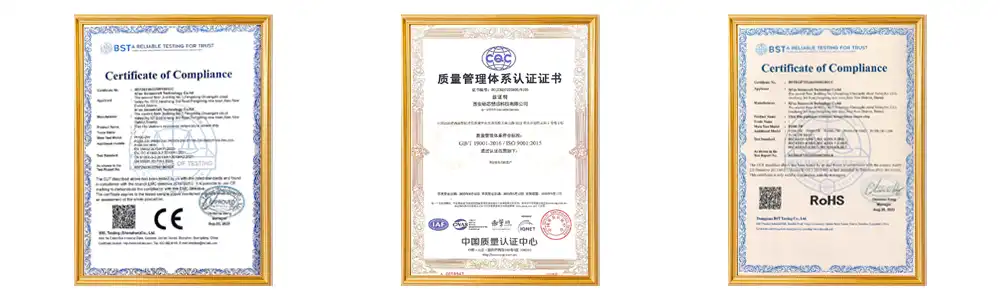
Because of concerns about battery safety, temperature sensing solutions have to be specially designed to meet the strict needs of car uses. Xi'an Tongzida Technology specializes in manufacturing high-precision Pt100 temperature probe solutions built on our proprietary thin-film platinum resistance technology. Our automated production lines produce sensors spanning -200°C to +850°C with accuracy reaching ±0.01Ω (1/30B level) and stability drift limited to 0.04% annually. We maintain ISO9001, ROHS, and CE certifications, ensuring quality standards that meet global automotive procurement requirements.
As an established Pt100 temperature probe manufacturer, we offer extensive customization capabilities including probe dimensions from 1.2mm to 4.0mm, multiple lead materials, and response times as fast as 0.05 seconds. Our engineering team provides dedicated technical support throughout sensor selection, integration, and calibration processes. Contact us at sales11@xatzd.com to discuss your specific battery monitoring requirements and receive customized solutions backed by our expertise in precision temperature measurement for safety-critical applications.
References
1. International Electrotechnical Commission. "Industrial Platinum Resistance Thermometers and Platinum Temperature Sensors - IEC 60751:2022." IEC Standards Publication, 2022.
2. Zhang, H., Wang, L., and Chen, Y. "Thermal Management Strategies for Lithium-Ion Battery Safety in Electric Vehicles: A Comprehensive Review." Journal of Power Sources, vol. 478, 2020, pp. 228-245.
3. Society of Automotive Engineers. "Battery Thermal Management Systems for Electric and Hybrid Vehicles - SAE J2929." SAE International Surface Vehicle Standard, 2021.
4. Morrison, K. and Sullivan, P. "Precision Temperature Measurement in Automotive Battery Management Systems: Comparative Analysis of Sensor Technologies." Automotive Engineering International, vol. 34, no. 3, 2021, pp. 56-67.
5. Xu, J., Deng, Z., and Wang, C. "Early Detection of Thermal Runaway in Lithium-Ion Batteries Through High-Precision Temperature Monitoring." IEEE Transactions on Industrial Electronics, vol. 68, no. 9, 2021, pp. 8547-8556.
6. German Association of the Automotive Industry. "Temperature Sensing Requirements for High-Voltage Battery Systems in Electric Vehicles - VDA Specification 305-100." VDA Quality Management Center, 2022.
Learn about our latest products and discounts through SMS or email