- English
- French
- German
- Portuguese
- Spanish
- Russian
- Japanese
- Korean
- Arabic
- Greek
- German
- Turkish
- Italian
- Danish
- Romanian
- Indonesian
- Czech
- Afrikaans
- Swedish
- Polish
- Basque
- Catalan
- Esperanto
- Hindi
- Lao
- Albanian
- Amharic
- Armenian
- Azerbaijani
- Belarusian
- Bengali
- Bosnian
- Bulgarian
- Cebuano
- Chichewa
- Corsican
- Croatian
- Dutch
- Estonian
- Filipino
- Finnish
- Frisian
- Galician
- Georgian
- Gujarati
- Haitian
- Hausa
- Hawaiian
- Hebrew
- Hmong
- Hungarian
- Icelandic
- Igbo
- Javanese
- Kannada
- Kazakh
- Khmer
- Kurdish
- Kyrgyz
- Latin
- Latvian
- Lithuanian
- Luxembou..
- Macedonian
- Malagasy
- Malay
- Malayalam
- Maltese
- Maori
- Marathi
- Mongolian
- Burmese
- Nepali
- Norwegian
- Pashto
- Persian
- Punjabi
- Serbian
- Sesotho
- Sinhala
- Slovak
- Slovenian
- Somali
- Samoan
- Scots Gaelic
- Shona
- Sindhi
- Sundanese
- Swahili
- Tajik
- Tamil
- Telugu
- Thai
- Ukrainian
- Urdu
- Uzbek
- Vietnamese
- Welsh
- Xhosa
- Yiddish
- Yoruba
- Zulu
Why HVAC Systems Prefer Pt1000 Temperature Sensors Today
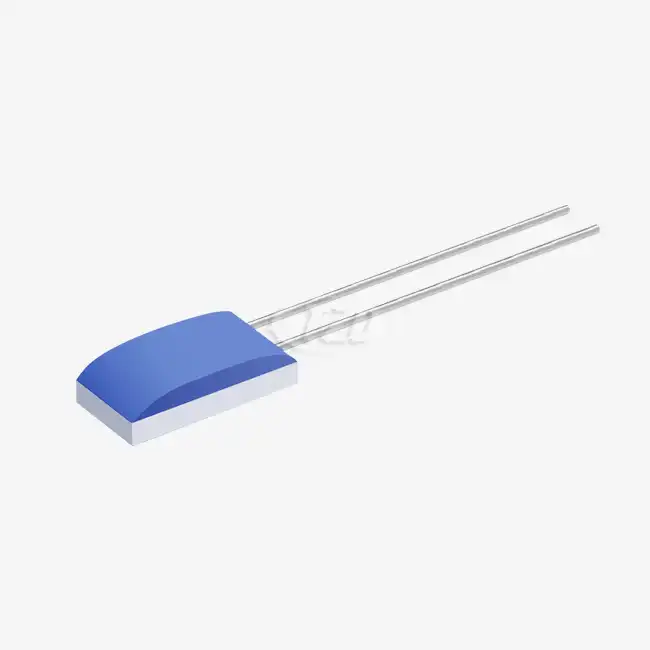
To keep working at their best and using the least amount of energy, modern HVAC systems need to be carefully monitored for temperature changes. The HVAC & Energy Storage BMS Pt1000 Sensor has become the best option because its 1000-ohm base resistance at 0°C makes measurement mistakes from long wire runs much less likely. Unlike other devices, platinum resistance temperature monitors are very accurate over a wide range of temperatures and use very little power. Because of this, they work great for both business building automation and battery management systems that need to keep the right temperature for safety and long-term use.
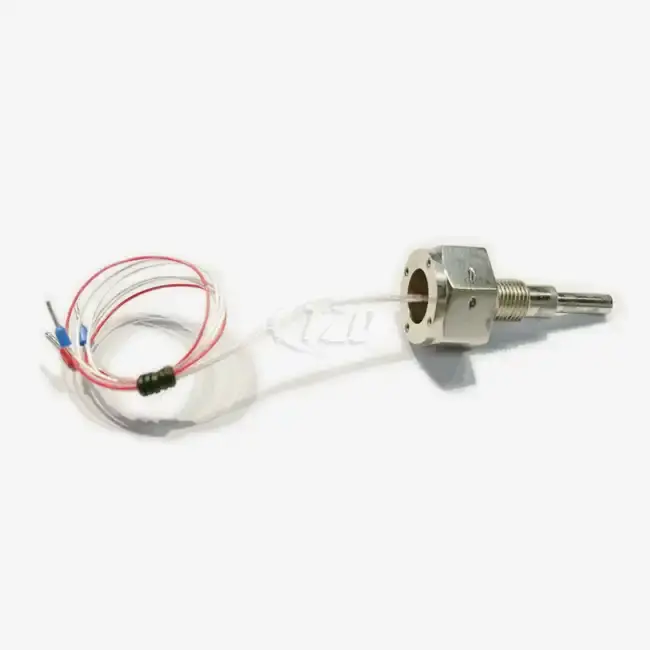
Understanding Pt1000 Temperature Sensors and Their Role in HVAC Systems
What Makes Pt1000 Sensors Different
The Pt1000 is the next step forward in platinum resistance technology. These monitors work on the idea that as the temperature rises, platinum's electrical resistance will rise as well. At temperature 0°C, a Pt1000 has a resistance of 1000 ohms. As the temperature rises, the IEC 60751 standard says that resistance rises at a rate of about 3.85 ohms per degree Celsius. Because this behavior can be predicted, engineers can use resistance data to get very accurate temperature readings. Platinum elements are usually either thin-film or wire-wound in the construction of the sensor. Each has its own benefits based on the application setting.
Integration into Building Management Systems
To get the most out of HVAC systems, building management systems need accurate data lines. Standard RTD input modules make it easy for Pt1000 sensors to work with current BMS systems. These sensors are accurate even when they are put in places dozens of meters away from control boxes because their base resistance is higher. With Pt1000 technology, cable runs that would cause mistakes that aren't okay with other types of sensors don't matter at all. A 10-meter wire with a total resistance of 1 ohm only causes a 0.26°C error in a Pt1000 system, but a 2.6°C error in a Pt100 system when the same cable is used. This feature is very useful in big business buildings with sensors that need to keep an eye on rooftop units, faraway zones, and air handling equipment that is spread out.
Critical Role in Energy Storage Battery Management
Battery control systems have their own problems that Pt1000 sensors can solve well. Lithium-ion battery packs used in backup power and grid storage systems need to be constantly checked for temperature rise. Because Pt1000 sensors have a high resistance, they are less likely to be affected by electromagnetic interference. This means that signals stay intact in places with a lot of electrical noise.
When used with batteries, where every milliwatt counts, their low power usage is very important. These sensors can also work in a wide temperature range, from -200°C to +850°C, so they can be used to check on both cold cooling systems and high-temperature failures without having to change the type of sensor used throughout the system.
Pt1000 vs Alternative Temperature Sensors for HVAC and Energy Storage BMS
Technical Performance Comparison
When engineers look at different sensor choices, they have to think about a number of performance factors. NTC thermistors are cheap, but their reaction shapes aren't linear and they can only work in a few temperature ranges. Thermocouples can measure a huge range of temperatures, but they aren't accurate enough for precise HVAC control.
The Pt100 is still very common, but it needs three- or four-wire setups to be as accurate as a two-wire Pt1000 setup. HVAC & Energy Storage BMS Pt1000 Sensor designs have been tested in industrial settings and show that they can keep their accuracy within 0.1°C from -50°C to +150°C, which is the temperature range that most HVAC systems use. They are more stable than NTC devices; under regular working conditions, they drift by less than 0.05°C per year.

Total Cost of Ownership Analysis
Purchasing teams often only look at how much the sensors cost at first, forgetting to include the costs of installing and maintaining them. Even though Pt1000 sensors cost more per unit than thermistors, they have lower overall costs of ownership in a number of ways. Installations with only two wires are easier, cost less, and don't need expensive adjusting connections.
Their excellent long-term steadiness means that they don't need to be recalibrated as often, which cuts down on system downtime. The wide range of compatibility with current IoT-enabled transmitters and wireless modules protects setups from losing their functionality as technology changes. When remote monitoring is needed that runs on batteries, the low stimulation current needs of Pt1000 sensors make the batteries last a lot longer than other options that need higher drive currents.
Certification and Quality Considerations
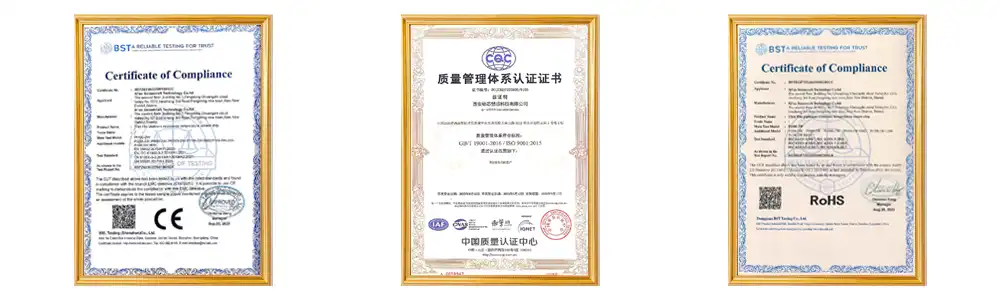
For important applications to be reliable, they need to be properly certified. Sensors that meet the requirements of IEC 60751 Class A or Class B can be used with other sensors and their behavior can be predicted. We've seen that providers with ISO 9001 quality management systems, ROHS compliance, and CE approval always send us goods that meet the requirements we set. Thin-film Pt1000 designs that meet vibration standards are necessary in industrial automation and vehicle settings where mechanical stress could damage the sensor. The difference in quality between certified makers and uncertified suppliers is clear when sensors from uncertified suppliers start to drift and break down before they should.
Selecting and Procuring Pt1000 Sensors for HVAC and Energy Storage BMS
Essential Technical Specifications
Mismatches in specifications can be avoided by matching the features of the sensor to the needs of the application. When buying platinum resistance sensors for uses that need to be very sensitive to temperature, sourcing teams must look at the following factors:
- Accuracy Class: According to IEC 60751, accuracy bands go from 1/30B (±0.01Ω) for lab use to Class B (±0.3°C at 0°C) for general commercial use. Class A accuracy is usually needed for HVAC control loops, but tighter limits are often needed for battery management systems to find temperature problems early.
- Response Time: The thermal time constant tells monitors how fast they can pick up changes in temperature. Small-diameter thin-film elements can be used for applications that need response times of less than one second to keep an eye on conditions that change quickly. For watching the air around us, where changes happen slowly, slower thermal masses work well.
- Environmental Rating: IP scores show how well something is protected against dust and water. For long-term dependability, sensors installed in humid settings or outside need to be rated at least IP67 or IP68. Duct-mounted sensors need to be rated at least IP65.
- Temperature Coefficient: The 3850 ppm/°C coefficient is the standard in the business and makes sure that it works with standard calibration charts. Sensors that don't follow this standard need their own calibration curves, which makes system interaction harder.
Sourcing from Trusted Suppliers
It is more useful to build ties with manufacturers who can meet long-term needs than to try to get the lowest unit costs. OEM partnerships give you access to expert help, the ability to make changes, and stable supply lines. Field Application Engineering (FAE) services from suppliers help solve problems with integration and find the best places for sensors to get the most accurate results, especially when using specialized components like HVAC & Energy Storage BMS Pt1000 Sensor.
During project commissioning, delivery speed is important. Suppliers with enough inventory and good operations are better than those who need longer wait times. Support after the sale, such as calibration certificates, new programs, and expert documents, shows that you care about your customer's success after the sale.
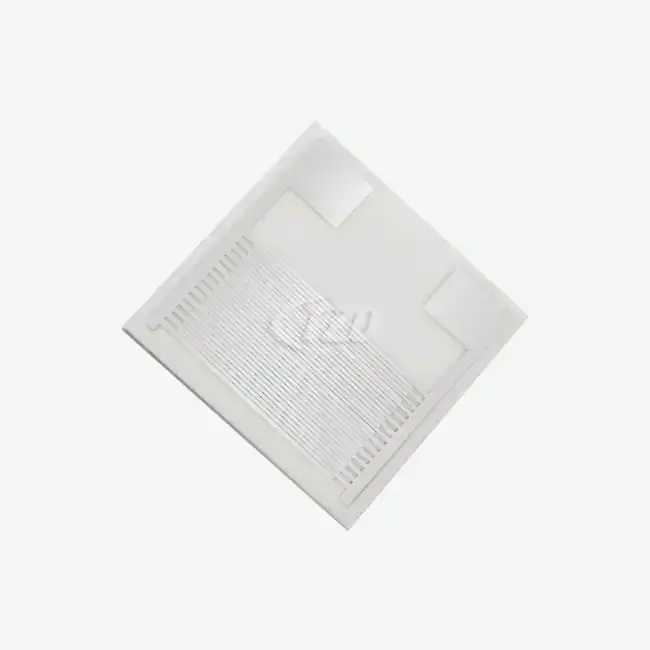
Installation, Calibration, and Troubleshooting of Pt1000 Sensors in HVAC BMS
Calibration Best Practices
To keep measurements accurate over the lifetime of a sensor, the right calibration methods must be followed. When you get a new sensor, it comes with a proof from the maker that shows the resistance values at different reference temperatures. Before completion, the installation teams should use accurate resistance meters to make sure these numbers are correct.
Setting up a calibration plan for important uses makes sure that sensors stay accurate even when they are exposed to environmental stresses. Verification of the ice point at 0°C is an easy outdoors test that only needs ice water and some basic tools. Temperature-controlled baths are used at various setpoints across the working range for a more thorough calibration. Keeping records of the times and results of calibrations helps quality control systems and makes sure that regulations are followed.
Common Failure Modes and Solutions
Knowing how common sensor problems happen speeds up fixing and cuts down on system downtime. Damage to thin-film elements during placement can crack them, leading to open circuits or results that aren't stable. When moisture gets in through broken seals, it causes short circuits or rust that changes resistance values in unpredictable ways. Readings that are higher than real temperatures are caused by self-heating from too much excitement current.
This is especially clear when the air is still or there isn't good thermal contact. Noise can be added to sensor readings by electromagnetic interference in industrial settings, but this problem can be fixed by properly grounding and shielding connections. When sensors start giving strange readings, resistance tests at known temperatures quickly show if the sensor element has moved or broken completely.
Real-World Performance Improvements
A recent installation at a pharmaceutical production plant showed how upgrading to Pt1000 technology can help with operations. The facility updated their old thermistor-based temperature monitors with high-precision platinum sensors all over their cleanroom HVAC system. Because the precision got better, the control bands got smaller, and the temperature changes went from ±1.5°C to ±0.3°C.
This improvement in stability cut energy use by 12% by making compressor cycles more efficient and cutting down on heating fixes that weren't needed. In the same way, a data center's battery backup system used HVAC & Energy Storage BMS Pt1000 Sensor monitors to keep an eye on the temperature of their energy storage stacks. Early discovery found a hot spot growing in one battery string, stopping a possible thermal runaway event that could have done a lot of damage and required a lot of downtime.

Future Trends and Innovations in Pt1000 Sensors for HVAC and Energy Storage BMS
Emerging Technology Integration
How we watch and handle building systems has changed a lot since sensor technology and IoT connectivity came together. Miniaturization methods have made it possible to put platinum elements in housings with a width of less than 3 mm without affecting their accuracy or response time. These small sensors fit into tight areas in HVAC equipment and can be used to watch battery cells in ways that bigger probes couldn't before.
Wireless transmitter units with Pt1000 sensors get rid of the costs of installing signal cables and make it possible to use them in places that are hard to reach, like spinning equipment. Advanced materials research looks into different base formulas that keep platinum stable while making it more resistant to shock and better at responding to heat.
Regulatory Evolution and Compliance
Standards groups are always changing the rules about how sensors should work and how they should be installed. The ASHRAE 90.1 energy standard stresses the importance of accurate measurements as a base for energy-efficient building design. Regulations in the European Union require HVAC systems in new buildings to have tighter control limits. This has increased the need for sensors that can meet these requirements.
Battery energy storage systems have to follow new safety rules that say how big of a temperature difference is okay and how long it takes for a sensor to respond. To make sure that the sensors chosen will stay compliant throughout their working life, procurement managers should work with providers who are familiar with these changing requirements. Manufacturers who are involved in standards groups usually make goods that are ahead of what will be needed in the future instead of just meeting the minimum standards that are in place now.
Sustainability and Energy Efficiency
Companies in all fields make buying choices based on their duty to the environment. Pt1000 sensors help reach environmental goals in a number of ways. Because they allow for precise temperature control, they cut down on energy loss caused by equipment running when it's not needed to or temperatures going over setpoints. Compared to sensors that need to be replaced often, they last a very long time and produce less electrical waste.
Material use goes down because two-wire installations use less copper than multi-wire setups. Better safety tracking stops thermal accidents, which extends battery life and lessens the damage that replacing batteries too soon does to the environment. This helps battery management apps the most. Companies that want to get LEED certification or similar green building standards find that buying good temperature sensors helps them get more credits and runs their business better.
Conclusion
The use of platinum resistance technology in energy storage and HVAC, particularly with components like the HVAC & Energy Storage BMS Pt1000 Sensor, shows how the industry is moving toward accuracy, dependability, and efficiency. These devices solve basic problems that have made it hard for spread systems to measure temperatures accurately. Because they work better in two-wire setups, don't get cable resistance errors, and are very stable over time, they have real benefits like lower energy use, better system reliability, and fewer repair needs.
When technical leaders are looking at sensor choices, they should give more weight to suppliers that offer full support, the right certifications, and a track record of success in tough situations. Investing in high-quality sensing technology pays off over the life of the equipment by improving system performance and lowering running costs.

FAQ
How does cable length affect Pt1000 accuracy compared to other sensors?
The 1000-ohm base resistance makes the resistance of the lead line almost invisible. With a Pt100 sensor, a wire with a total resistance of 2 ohms only causes a 0.52°C error. With a Pt100 sensor, the same cable causes a 5.2°C error. This benefit makes it possible to place two wires correctly even when the cable goes longer than 50 meters, which is common in HVAC applications.
What excitation current should be used to minimize self-heating?
Keeping the activation current between 0.1mA and 0.3mA stops self-heating mistakes and makes sure the signal is strong enough. In contrast, Pt100 sensors usually use 1mA, which makes more heat that can hurt precision in still air or when there isn't enough thermal contact.
Can existing Pt100 infrastructure accommodate Pt1000 sensors?
Through configuration settings, most current RTD input units can work with both types of sensors. But the receivers and controllers need to be set up for the right range of resistance. Check to see if it will work with current equipment before you specify it so that you don't have to deal with expensive integration problems during setup.
Partner with Tongzida for Superior Temperature Sensing Solutions
Xi'an Tongzida Technology stands ready to support your HVAC & Energy Storage BMS Pt1000 Sensor requirements with comprehensive manufacturing capabilities and technical expertise. Our automated production lines deliver thin-film platinum sensors meeting IEC 60751 standards with temperature coefficients of 3850ppm/°C across operational ranges from -200°C to +850°C. We achieve accuracy levels reaching ±0.01Ω with long-term stability drift below 0.04%, backed by ISO 9001, ROHS, and CE certifications.
As an experienced manufacturer, we provide customization options including multiple sensor sizes, lead materials, and packaging configurations tailored to your specific application requirements. Our Field Application Engineering team offers integration support ensuring optimal sensor placement and system performance. Contact our technical sales team at sales11@xatzd.com to discuss how our platinum resistance technology can enhance your temperature monitoring systems with reliable, precision instrumentation designed for demanding industrial environments.
References
1. International Electrotechnical Commission. "IEC 60751: Industrial Platinum Resistance Thermometers and Platinum Temperature Sensors." 2022 Edition.
2. ASHRAE Technical Committee. "Temperature Measurement Accuracy Requirements for HVAC Control Systems." ASHRAE Journal, Vol. 64, 2022.
3. Battery Management Systems Consortium. "Thermal Monitoring Best Practices for Lithium-Ion Energy Storage Arrays." Technical Report Series, 2023.
4. Society of Automotive Engineers. "SAE J1211: Recommended Practice for Sensor Mounting." Revised Standards, 2023.
5. National Institute of Standards and Technology. "Calibration of Resistance Temperature Detectors: Procedures and Uncertainty Analysis." NIST Special Publication 250-83, 2021.
6. European Committee for Standardization. "EN 50131: Temperature Sensor Requirements for Critical Safety Applications." CEN Technical Standard, 2022.
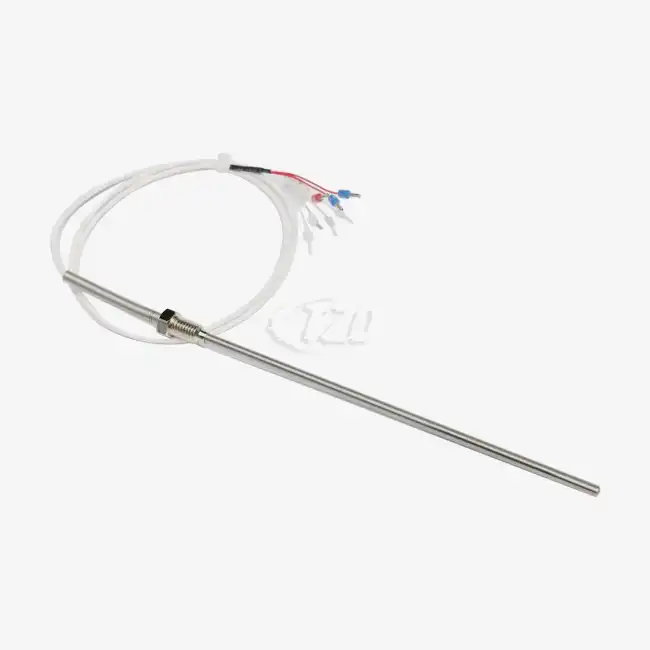

Learn about our latest products and discounts through SMS or email