- English
- French
- German
- Portuguese
- Spanish
- Russian
- Japanese
- Korean
- Arabic
- Greek
- German
- Turkish
- Italian
- Danish
- Romanian
- Indonesian
- Czech
- Afrikaans
- Swedish
- Polish
- Basque
- Catalan
- Esperanto
- Hindi
- Lao
- Albanian
- Amharic
- Armenian
- Azerbaijani
- Belarusian
- Bengali
- Bosnian
- Bulgarian
- Cebuano
- Chichewa
- Corsican
- Croatian
- Dutch
- Estonian
- Filipino
- Finnish
- Frisian
- Galician
- Georgian
- Gujarati
- Haitian
- Hausa
- Hawaiian
- Hebrew
- Hmong
- Hungarian
- Icelandic
- Igbo
- Javanese
- Kannada
- Kazakh
- Khmer
- Kurdish
- Kyrgyz
- Latin
- Latvian
- Lithuanian
- Luxembou..
- Macedonian
- Malagasy
- Malay
- Malayalam
- Maltese
- Maori
- Marathi
- Mongolian
- Burmese
- Nepali
- Norwegian
- Pashto
- Persian
- Punjabi
- Serbian
- Sesotho
- Sinhala
- Slovak
- Slovenian
- Somali
- Samoan
- Scots Gaelic
- Shona
- Sindhi
- Sundanese
- Swahili
- Tajik
- Tamil
- Telugu
- Thai
- Ukrainian
- Urdu
- Uzbek
- Vietnamese
- Welsh
- Xhosa
- Yiddish
- Yoruba
- Zulu
Why OEM Buyers Choose Pt1000 Semi-Finished Bare Lead Probes
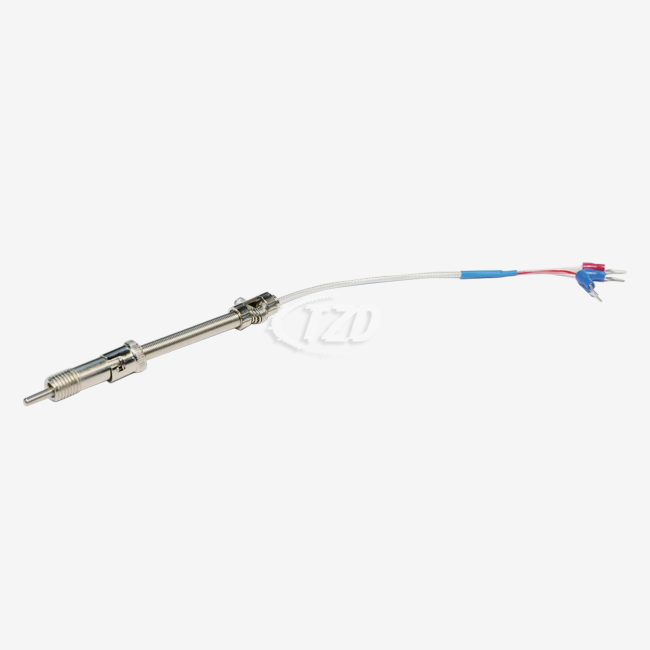
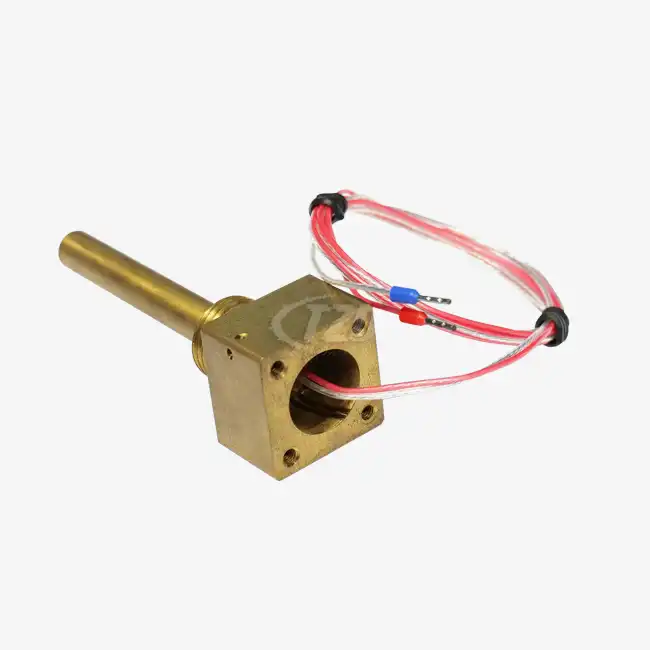
Original Equipment Manufacturers (OEMs) choose Pt1000 TC3750 Semi-Finished Bare Lead Probes because these sensors offer great customization options, precise accuracy, and reliable performance in harsh industrial settings. The Pt1000 TC3750 Semi-Finished Bare Lead Probe has a temperature coefficient that is stable and cost-effective, which makes it perfect for uses that need accurate measurements over a long period of time. Instead of pre-assembled sensors, Pt1000 TC3750 Semi-Finished Bare Lead Probes let engineers change the housing configurations, wire lengths, and connection types to exactly match the needs of the system. This makes integration much easier and lowers production costs while still providing better thermal response.
Understanding Pt1000 Semi-Finished Bare Lead Probes
In robotics, medical tools, car electronics, and industrial automation, measuring temperature is a key part of many important processes. We've seen that accuracy is very important when self-driving cars need accurate temperature readings to keep parts from breaking or when medical devices need consistent data to keep patients safe. Pt1000 TC3750 Semi-Finished Bare Lead Probes represent a big step forward in sensor technology. They work on the idea that platinum's electrical resistance changes consistently as the temperature changes.
How Pt1000 Sensors Work
Platinum resistance thermometers work by measuring changes in resistance that happen when the temperature changes. At 0°C, a Pt1000 sensor has 1000 ohms of resistance, while a Pt100 sensor only has 100 ohms. This tenfold increase in resistance means that more voltage is released for every degree change. This makes the measurement more accurate and less sensitive to electronic noise.
The number TC3750 means that the temperature coefficient is 3750 ppm/K, which means that resistance rises by 3.75 ohms for every degree Celsius. This coefficient strikes a good balance between sensitivity and production cost, which makes it especially useful for uses in temperatures ranging from -50°C to +300°C.
Key Technical Specifications
Based on our experience with high-performance temperature tracking, we know that accuracy is what makes a monitor valuable when buying things based on technology. The accuracy of high-quality Pt1000 TC3750 sensors is ±0.1°C across their entire working range, and when properly calibrated, premium models can hit ±0.03°C.
Response time depends on the type of probe used, but bare lead configurations usually answer in 0.5 to 2 seconds in air and faster in liquids. When compared to insulated options, open platinum film elements can reach thermal balance quickly because they have a lot of thermal mass. Long-term stability is still important for OEMs that want to keep recalibration costs to a minimum. Thin film platinum sensors that are properly made have drift rates below 0.05% per year when used within certain limits.
Applications in Industrial Environments
Accurate temperature tracking is becoming more and more important for process control and quality assurance in manufacturing automation systems. In semiconductor production, machine vision systems need a stable environment temperature to keep the optical calibration, and in car electronics, ADAS components need constant thermal management to keep them from wearing out too quickly.
When security tracking equipment is used outside in difficult conditions, it needs sensors that stay accurate even when they are exposed to changes in temperature and humidity. We've seen robotic systems use spread temperature networks to get the most out of their motors and keep them from overheating during long rounds of heavy use. To meet legal requirements, medical sterilization equipment needs to measure temperatures in a way that has been proven to work. This means that sensor dependability is a must.
Why Semi-Finished Bare Lead Configurations Matter
OEMs like Pt1000 TC3750 Semi-Finished Bare Lead Probes because they let them be customized for specific uses without having to use pre-made parts. Engineers can choose lead wire materials like pure platinum, platinum-nickel, or silver-nickel based on how well they work with chemicals and how much they expand and contract when heated. Optimizing the wire's size and length cuts down on electromagnetic interference and self-heating in low-current monitoring circuits.
Not having connectors or housings already fixed gets rid of points of failure that aren't needed, which lowers the total cost of the system. Manufacturing flexibility lets changes be made to specific batches during testing stages without having to make expensive equipment changes. This speeds up the product development process by a large amount.
Comparing Pt1000 TC3750 With Other Temperature Sensors
To choose the right temperature sensor technology, you need to know how the different options compare in terms of performance. Hardware experts who choose sensors have to make choices that affect how accurate the product is, how much it costs to make, and how reliable it is in the long run.
TC3750 Versus TC3850 Variants
Even though the change in temperature coefficients between the TC3750 and TC3850 devices doesn't seem like much, it has big effects. TC3850 sensors, which meet IEC60751 norms, are a little more sensitive, measuring 3.85 ohms per degree Celsius. This higher sensitivity is good for uses that need the highest resolution, but it makes the manufacturing cost more expensive because the material purity standards are tighter.
The Pt1000 TC3750 Semi-Finished Bare Lead Probe is one example of how Pt1000 TC3750 Semi-Finished Bare Lead Probe different versions of the TC3750 offer good performance for most industrial uses at lower prices, which makes them appealing for projects that want to save money without losing durability. The fact that TC3750 sensors can be used with existing systems and offer better value ideas during supplier talks is something that procurement managers like.
Comparison With Thermocouples
Thermocouples are the most common type of high-temperature sensor above 600°C, but below 300°C, platinum RTDs are more accurate and stable. Thermocouples make microvolt-level signals that need to be amplified in a special way. On the other hand, Pt1000 sensors make changes in resistance that can be measured and easily turned into digital signals using standard electronics.
When compared to thermocouple polynomial corrections, platinum resistance sensors are easier to calibrate because they are linear by nature. We've found that RTDs are better for upkeep costs than thermocouples because their aging is more expected. This is because thermocouples break down randomly at junction places. Quality control teams like that platinum sensors can be traced back to international standards by checking the resistance, while thermocouple calibration needs to account for the reference junction.
Bare Lead Versus Insulated Lead Probes
Bare lead designs put platinum elements directly in the environments being tested, which improves the speed and accuracy of thermal reaction. Insulated versions keep sensors safe from mechanical damage and chemical contact, but they add temperature lag because of the insulation layers. The way they are installed is very different. Bare lead probes need to be handled carefully so that the elements don't get damaged, but shielded sensors can handle rougher installation conditions.
When bare lead designs are integrated into safe housings during OEM assembly processes, they are more cost-effective because they don't need as many security layers. Durability issues rely on the location where the sensors will be used. Corrosive environments require insulated sensors, even though they don't work as well, while clean industrial settings benefit from bare lead response.
Procurement Guide for OEM Buyers: Sourcing Pt1000 TC3750 Semi-Finished Bare Lead Probes
Product quality, supply chain security, and the value of long-term partnerships are all directly affected by strategic sourcing choices. Technical leads and buying teams work together to evaluate vendors and negotiate contracts.
Vendor Selection Criteria
When looking for precision devices for important uses, the skills of the supplier are very important. We suggest that you judge makers not only by how well they can put chips together, but also by how well they can create and make chips. Vertical integration is used by companies like Xi'an Tongzida Technology to make sure that quality control is maintained throughout the whole production process, from thin film casting to final testing.
Pt1000 TC3750 Semi-Finished Bare Lead Probe RoHS and CE compliance make sure that regulations for foreign markets are followed, while ISO9001 approval is a basic check for quality management. Manufacturing automation shows how production can be scaled up and how consistent the products are from one lot to the next, which are important factors for OEMs looking to buy a lot of them after the prototypes work well.
Customization Options and Specifications
Customizing a Pt1000 TC3750 Semi-Finished Bare Lead Probe includes more than just choosing the length of the wire; it also includes important performance factors. The material of the lead wire affects its highest working temperature and chemical resistance. For example, pure platinum leads can be used up to 850°C, but they are much more expensive than platinum-nickel alloys that can be used up to 300°C.
Choosing the right element size affects both reaction time and vibration resistance. Elements that are smaller answer faster but can't handle shocks as well. We've shown clients how to set various settings at the same time. There are different types of packaging, such as vacuum-sealed containers for uses that need to keep moisture out and large containers for high-volume integration. Having access to technical support from field application engineers is very helpful during the stages of refining specifications and approval testing.
Bulk Ordering and Pricing Considerations
When you make a volume promise, you can get better prices and faster service in the supply chain. OEM buyers usually try a small batch of products before ordering a lot of them, which requires suppliers to be flexible during the approval stages. The way prices are set takes into account the cost of raw materials, the difficulty of making the product, and the need for customization. Platinum content is a big part of the cost of the material.
Prices on the market change all the time, but long-term supply deals can include price stabilization methods that protect both parties from price changes. Different suppliers have different minimum order amounts. However, well-known companies with automatic production lines can often handle smaller initial orders to help with the development of new products. Delivery lead times range from a few weeks for basic configurations to several months for highly customized orders that need special production runs.
Installation, Calibration, and Maintenance Best Practices
The best performance from sensors relies on how they are integrated and how they are maintained over time. Engineering teams need to come up with processes that make measurements more accurate and parts last longer.
Installation Procedures for Maximum Accuracy
Mounting methods have a big effect on how accurate measurements are. Bare lead sensors need strong mechanical support that doesn't put too much stress on the platinum elements. Compression placement can cause strain that changes resistance values. Optimizing the thermal contact between the sensor and the surface being measured reduces temperature differences. Thermal interface materials improve contact for solid-surface applications, but flow needs to be thought about for immersion designs to make sure that samples are representative.
Electromagnetic interference needs to be taken into account when wiring. In electrically noisy settings, twisted pair setups and shielded wires make it easier to pick up noise. When excitation currents go over the suggested limits, self-heating effects can be measured. For general uses, we usually set the maximum at 1mA, and for precision work, we set it lower. Lead wire resistance adjustment is necessary for accurate measurement; four-wire resistance measurement methods get rid of lead resistance mistakes that would otherwise make measurements less accurate.
Calibration Techniques and Frequency
Calibration sets guidelines for temperature accuracy and checks the sensor's performance. Checking the ice point at 0°C makes field calibration easy; a Pt1000 sensor that is working right reads 1000.0 ohms ±0.4 ohms when submerged in a mix of ice and water. To calibrate more than one point across an entire working range, you need precise temperature pools or dry-block calibrators that have references that can be tracked. The amount of time between calibrations depends on how important the application is and how it is used.
For example, medical and aerospace applications may need to be checked every three months, while stable industry settings can go up to once a year. Different industries have different documentation needs. For example, controlled industries need thorough calibration records with chains that can be traced back to national standards. Pt1000 TC3750 Semi-Finished Bare Lead Probe We've set up calibration processes for clients that strike a balance between accurate measurements and high working efficiency, so there is no need for unneeded downtime.
Troubleshooting and Preventive Maintenance
Open circuits from mechanical damage, resistance drift from contamination, and sporadic links from vibration are all common ways for sensors to fail. The first step in diagnosing something is checking the resistance at known temperatures and comparing the numbers found with what was expected. Surface resistance can be changed by process fluids or contact to the environment. In many cases, performance can be restored by gently cleaning the surface with the right chemicals.
When platinum plates get damaged mechanically, sensors usually need to be replaced. Cracks or delamination can be seen under a microscope. Protecting the environment and checking in on a regular basis are important parts of preventive maintenance. Setting up standard resistance profiles during installation gives you data to use to find signs of deterioration. Failures caused by rust can be avoided by inspecting connectors on a regular basis. This is especially important in environments that are wet or corrosive.
Why OEMs Prefer Pt1000 TC3750 Semi-Finished Bare Lead Probes: Rational Choice Analysis
For technology-driven purchasing choices, these monitors are especially appealing for a number of reasons. A cost-benefit study shows that there are benefits that go beyond the original purchase price and include all the costs of owning the car.
Superior Accuracy in Demanding Conditions
Accurate measurements allow for better process control and better product quality. Platinum resistance monitors stay accurate over a wide range of temperatures because they don't need the nonlinearity fixes that other technologies do. Thermal cycling stability makes sure that performance stays the same over the life of the device.
Thin film sensors that are properly made can handle millions of temperature cycles without any major shift. In mobile applications, vibration and shock protection are very important. In car and robotics applications, robust sensor designs can handle 40g of vibration and 100g of shock. Platinum elements are resistant to chemicals, so they can be used in harsh settings that quickly break down thermocouple joints or thermistor materials.
Integration Flexibility and System Compatibility
Configurations that are only partially finished can be easily changed to fit different installation needs. Customized lead lengths get rid of extra wire that can cause mistakes in resistance and electromagnetic susceptibility. Engineers like being able to choose connector types that work with current systems. This keeps them from having to deal with adapters and possible failure points.
Small element sizes make it possible to put sensors into tight spaces where pre-made sensors won't fit. A simple electrical link makes the analog front end less complicated. Standard resistance measurement circuits work well with current microcontrollers and data acquisition systems. When it comes to software integration, linear links between resistance and temperature make calibration methods easier to use than the polynomial corrections that thermocouples need.
Long-Term Reliability and Cost Effectiveness
Total cost study shows that platinum devices are better, even though they cost more at first. Longer lifespan means less replacements and lower costs for downtime. Stable calibration cuts down on ongoing maintenance costs; once a year checks are better than three times a year checks for technologies that aren't as stable. For long production runs, supply chain stability is important.
Standardized manufacturing methods and the availability of platinum materials make sure that purchases are always the same over the course of a product's lifecycle, which can last for years. Satisfaction with performance and support leads to customer loyalty. Once a solution is put in place and proven to work, OEMs rarely move suppliers unless they have strong reasons to. They know that the worth of the relationship goes beyond the price of the parts.
Conclusion
In conclusion, Pt1000 TC3750 Semi-Finished Bare Lead Probes meet important needs for OEM buyers in many different industries. Their accurate measurements, ability to be customized, and long-lasting dependability are all perfect for technology-driven buying goals. The TC3750 temperature coefficient is the best combination of efficiency and cost-effectiveness for use in robotics, medical equipment, industrial automation, and car electronics.
Standardized production processes keep the supply chain running smoothly while semi-finished designs allow integration specific to the application. Platinum resistance sensors will continue to be important parts of precision temperature sensing uses even as the needs for thermal control get more complex in new technologies.
FAQ
What distinguishes TC3750 from TC3850 platinum sensors?
The main difference is in how the resistance changes with temperature. TC3850 sensors change by 3.85 ohms per degree Celsius, while TC3750 sensors change by 3.75 ohms per degree Celsius. The TC3850 sensors are compliant with IEC60751 standards and have a slightly higher sensitivity, which is good for uses that need the highest precision. TC3750 sensors offer similar performance at a lower price, which makes them a good choice for projects that need to stay within a budget without losing durability.
Can lead wire length be customized for specific applications?
Of course. One big benefit of semi-finished setups is that lead wires can be changed to fit your needs. Wire lengths from millimeters to meters can be used for a variety of application needs. For medium-temperature uses, platinum-nickel alloys are a choice, and pure platinum is used for high-temperature uses. Custom designs allow for the best system integration without extra wires that can mess up measurements.
How often should Pt1000 sensors undergo calibration?
How often you calibrate depends on how important the program is and how it is being used. Medical equipment and aerospace are two examples of regulated businesses that usually need verification every three or six months. In stable industrial settings, gaps may be stretched to yearly rounds. Setting a baseline for performance during commissioning and keeping an eye on drift signs helps make the most of calibration plans, combining the need for accurate measurements with the need to run operations quickly.
Partner With Tongzida for Precision Temperature Sensing Solutions
Xi'an Tongzida Technology is one of the best companies that makes Pt1000 TC3750 Semi-Finished Bare Lead Probes because it combines advanced thin film manufacturing with full customization options. Our automatic production lines make sure that the quality is the same at room temperature, high temperature, and very low temperature. They are certified by ISO9001, RoHS, and CE. For tough jobs, we have lead materials that can be changed to fit your needs, element sizes ranging from 1.2 mm to 4.0 mm, and response times of up to 0.05 seconds.
Throughout the product development cycle, you can get technical help from experienced field application engineers to make sure you choose the right sensors and figure out how to integrate them correctly. Contact our team right away at sales11@xatzd.com to talk about your unique temperature sensing needs and get full quotes for precision sensors that will make your system work better and be more reliable.
References
1. Webster, J.G. (2016). The Measurement, Instrumentation and Sensors Handbook: Spatial, Mechanical, Thermal and Radiation Measurement. CRC Press.
2. Childs, P.R.N. (2011). Practical Temperature Measurement. Butterworth-Heinemann Publishing.
3. International Electrotechnical Commission (2008). IEC 60751: Industrial Platinum Resistance Thermometers and Platinum Temperature Sensors. IEC Standards Publication.
4. Nicholas, J.V. & White, D.R. (2001). Traceable Temperatures: An Introduction to Temperature Measurement and Calibration. John Wiley & Sons.
5. Bentley, R.E. (2005). Handbook of Temperature Measurement Vol. 3: The Theory and Practice of Thermoelectric Thermometry. Springer Science & Business Media.
6. McGee, T.D. (1988). Principles and Methods of Temperature Measurement. John Wiley & Sons Industrial Instrumentation Series.

Learn about our latest products and discounts through SMS or email